
Khanitin Jornkokgoud
Lecturer in Psychology at the Department of Educational Psychology and Guidance, Faculty of Education, Mahasarakham University, Thailand.
Gender differences in PERMA well-being among university students: a network analysis
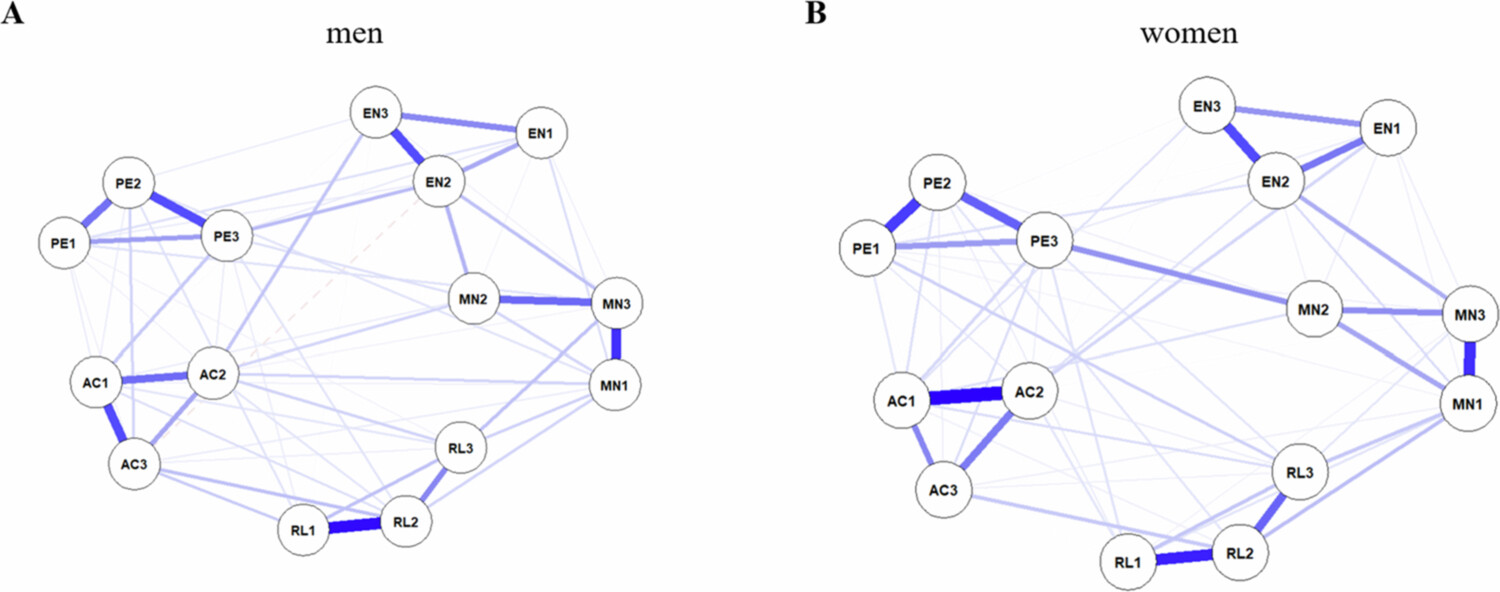
While gender differences in well-being have been widely documented, less is known about how the five PERMA dimensions—positive emotion, engagement, relationships, meaning, and accomplishment—interact across genders. This study investigates gender differences in the network structure of PERMA well-being among university students using a network analysis approach. A total of 946 undergraduate students participated, with equal representation of men and women. Separate Gaussian graphical models were estimated for each gender using regularized partial correlations, and network comparison tests were conducted to examine differences in global strength, structure, and specific edge weights. The results revealed no significant gender differences in overall network structure or global connectivity, indicating a robust and shared framework of flourishing. However, local differences emerged, with accomplishment-related items showing greater centrality for men and several emotional–relational connections differing between genders. These findings suggest that gender differences in well-being are reflected more in the relative salience and interconnections of specific components rather than in the overall structure. The results underscore the importance of gender-sensitive well-being interventions in higher education that account for these nuanced patterns.